

How Is the Heating Function in Pleasure Toys Made?
|
30-Second Summary: How Is the Heating Function in Pleasure Toys Made?
Best for: Anyone curious about how heating functions in women’s pleasure products work, including design logic, material choices, and safety considerations.
Key idea: A heating function is not simply about making a product warm. It is the result of coordinated design between internal heating components, temperature control systems, thermal pathways, and outer materials to create stable warmth, natural touch, and safe use.
Reading note: A truly good heating function is not about being hotter. It is about recreating a body-like warmth that feels natural, stable, durable, and reassuring.
In recent years, more and more women’s pleasure products have begun to feature a heating function. Heated eggs, heated massagers, and products that combine heating with suction or vibration are becoming more common, expanding the experience beyond rhythm and stimulation into something closer to body warmth, softness, and comfort. But when people first see a heating function, the question is often simple: how is this actually made? At first glance, it may seem like the product is simply made warm. In reality, the design is far more refined, involving heating components, thermal pathways, outer materials, temperature control systems, waterproof sealing, and long-term safety and stability. In this article, HHcom explains how the heating function in pleasure toys is made, what design logic sits behind it, why material choice matters so much, and why the best heating design is not about high heat, but about naturalness and trust. If you also want to understand women’s pleasure products through the lens of design, texture, and use experience, you can also browse the HHcom full collection, where different functions, sensations, and usage styles may help you find what suits you best.
What is the heating function in pleasure toys? Why do women’s products increasingly value warmth?
A heating function in a pleasure toy is not simply about making the product feel hot. It is about keeping certain contact areas within a temperature range that feels naturally comfortable to the human body, so the overall experience becomes softer, more natural, and more enveloping. For many women, temperature directly affects how easily a product is accepted. If the product feels too cold, too rigid, or too mechanical when it first touches the skin, the body tends to relax less easily. By contrast, when the surface warmth feels closer to body temperature, the entire experience can feel more intuitive and more welcome.
This is exactly why more premium women’s pleasure products have started treating heating as part of the experience—not just a technical feature. Women’s sensory experience is not shaped only by the strength of vibration or stimulation. It is also shaped by the first moment of contact, the temperature contrast, the softness of the material, and the ease with which the body can settle into the rhythm. When a product is designed to feel more body-friendly in all of these details, the overall experience naturally becomes more refined.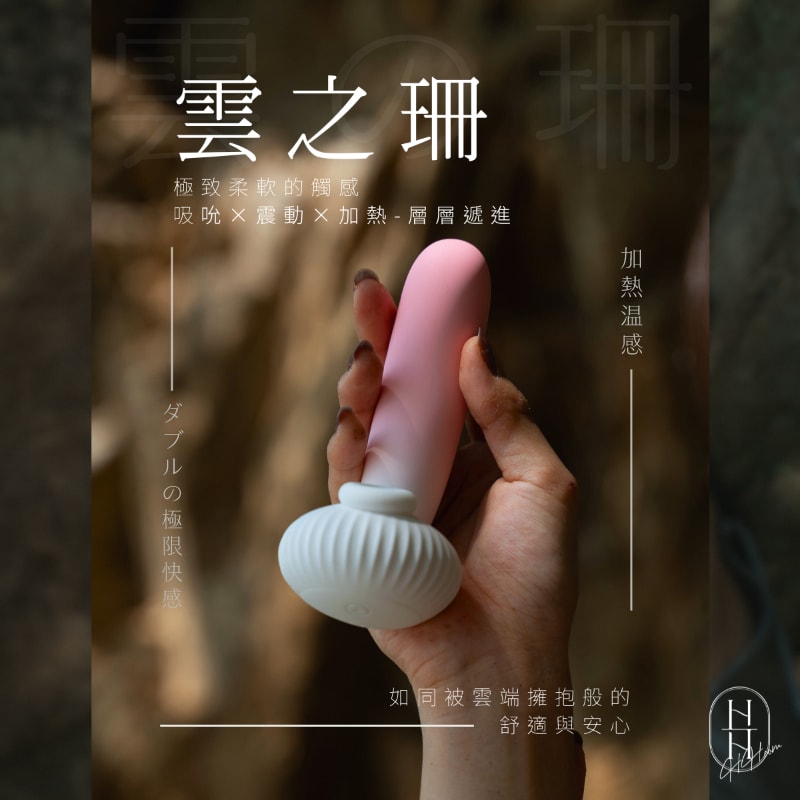
In other words, the real goal of a heating function is not “heat.” It is to make the product feel closer to the body—and easier for the body to accept.
HHcom Editorial View
For HHcom, the heating function is not just another specification. It is part of moving women’s pleasure products away from being purely functional tools and closer to body-friendly experience design. The best warmth does not feel like a product “heating up.” It simply feels more natural.
How is the heating function in pleasure toys made? The basic logic of heating components, sensors, control, and internal structure
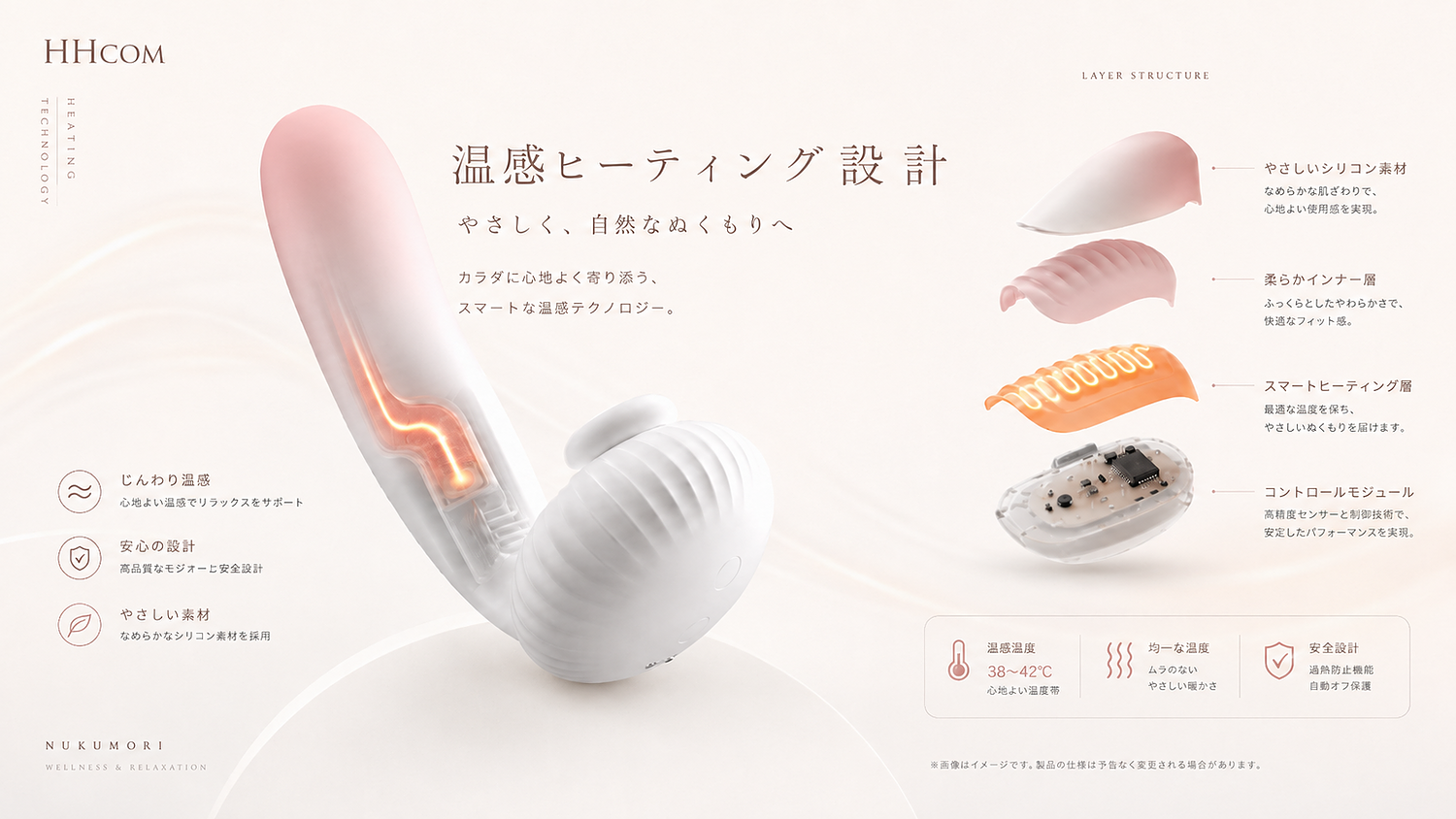
A simple way to understand how a heating function is made is to see it as a small internal system built around heating, sensing, control, heat transfer, and protection. The first step is placing a heating component inside the product. Its job is not to create sudden high heat, but to release warmth steadily. The second step is integrating temperature sensing and control, so the system can detect whether the current temperature stays within a defined range. The third step is structural design: determining how heat moves from the inside to the outer layer, and how to make the warmth feel evenly distributed across the contact area.
That means the heating function is not just a single part added into the product. It is part of the product’s entire architecture. If heating exists but heat transfer is poorly designed, the surface may feel inconsistent. If the temperature control logic is weak, the warmth may fluctuate. If the outer shell and internal components are not positioned carefully, even waterproofing, battery life, and durability can be affected. So the real challenge in making a heating function is not simply “putting in something that gets warm.” It is making sure the warmth is delivered in a stable, safe, and natural way exactly where the user can feel it.
In more premium products, this also includes considerations such as warm-up speed, steady-temperature efficiency, power use, and how heating interacts with other modes. Some products combine heating with vibration, while others allow the user to switch heating on and off independently. All of these choices are part of the experience design logic.
| Design layer | Main role | What it affects in use | Key design focus |
|---|---|---|---|
| Heating component | Provides a stable heat source | Warm-up speed and evenness | Stable output rather than high-heat bursts |
| Temperature sensing | Detects real-time temperature | Prevents overheating or temperature fluctuation | Response speed and precision |
| Control module | Regulates heating range | Temperature stability over time | Keeping warmth natural and steady |
| Thermal structure | Moves heat to the contact surface | Whether the warmth feels smooth and even | Avoiding local hotspots and temperature gaps |
| Sealing & waterproofing | Protects the internal system | Durability and safety | Structural integrity and product lifespan |
HHcom Editorial View
Many people think a heating function is just one more switch. From a manufacturing perspective, it is really a complete structure-and-experience system. Making something warm is not the hard part. Making it stable, safe, and seamless in use is where the real work is.
Why are materials and thermal design so important? Because the quality of warmth is decided by surface feel
Whether a heating function feels natural depends heavily on the outer material. What the user actually touches is not the internal heating component, but the silicone, the exterior covering, and the product’s outer structure. If the outer material transfers heat too slowly, the product may feel underwhelming. If heat is transferred unevenly, some areas may feel too warm while others barely feel warm at all.
That is why premium pleasure products do not only ask whether a product can heat up. They also ask whether the material feels skin-friendly, whether it is soft enough, whether it transfers warmth efficiently, and what kind of first impression it gives on contact. This is also why food-grade silicone and liquid silicone are often used in high-quality women’s products. Their value is not only in safety, but in their ability to create a touch and enveloping feel that better matches women’s expectations of comfort.
Thermal pathway design is just as important. Good heating design should make the warmth feel like it gently rises to the surface rather than appearing as a sudden hotspot. When the material feels soft and the temperature spreads evenly, users are less likely to be pulled out of the experience by a mechanical sensation, and more likely to stay connected to their own body.
How is heating safety controlled? Why do premium products care so much about temperature logic and protection systems?
When people hear “heating,” safety is often their first concern—and that is exactly right. If a heating function is not designed with proper temperature control, the user experience becomes unstable and the product can lose the sense of trust it should provide. A truly mature heating design controls risk from several angles, including temperature caps, sensor feedback, overheat protection, timed control, and power management between the battery and the heating module.
That is why a heating function cannot be judged by one part alone. The whole system has to “know” how warm it currently is, whether it should stop heating, and whether it should reduce output. If those control logics are not in place, a product may still be capable of heating—but that does not make it a mature, safe, or trustworthy feature.
In women’s products, safety control is not just about preventing accidents. It is also part of psychological comfort. When a product warms steadily, does not suddenly overheat, and does not fluctuate unpredictably, the user is more likely to relax and trust it. That is exactly why premium women’s pleasure products invest so much thought into temperature control systems.
How does HHcom think about heating functions? Through Japanese-inspired craftsmanship, material standards, and women-centered experience design
For HHcom, the heating function in a pleasure toy is not simply an added feature. It is a more refined experience proposal. A heating function only deserves a place in a women’s pleasure product if it answers one question first: does it help women feel more natural, more relaxed, and more understood? If the design only chases feature lists or specification highlights while ignoring materials, temperature stability, and contact comfort, then even a complex function may still fail to offer real value.
HHcom has always placed strong emphasis on materials and touch. This is part of why our approach leans toward a Japanese-inspired craftsman mindset. If heating is to be done well, the inside must be precise—but the outside must also be restrained. The temperature does not need to be dramatic. It needs to feel just right. The design does not need to show off the technology. It should allow users to barely notice the technology at all, while clearly feeling the comfort it brings.
From a manufacturing perspective, that means higher demands on material selection, mold precision, sealing quality, and stability testing. From a brand perspective, it means HHcom does not see women’s pleasure products as stimulation tools alone, but as products that follow the rhythm of the female body and fit into a refined everyday aesthetic. If heating exists, it should serve that philosophy rather than compete with it.
FAQ
How is the heating function in pleasure toys made?
Is the heating function just about making the product warm?
Is a hotter heating function always better?
Why do materials affect the heating experience so much?
Why do premium pleasure products care more about heating safety design?
The best heating function is not about technical display — it is about helping the body relax more naturally
Once you begin looking at heating through the lens of design logic, materials, safety, and experience, it becomes much easier to see the real maturity and detail behind a women’s pleasure product.
See Featured Products
Start with a heated product to better understand how warmth and design come together in women’s pleasure products.
Browse the Collection
Choose more HHcom products by material, function, and use scenario.
Read More
Continue exploring product design, relaxation, and women’s wellness topics.
Further Reading
- If you want to keep learning about material choices and product design in women’s pleasure items: More HHcom women’s wellness and product curation articles
- If you want to compare products with different functions directly: HHcom Full Collection