How Should Women Care for Intimate Areas? A Complete Guide to Cleansing, Care, and Everyday Comfort

How Should Women Care for Intimate Areas? A Complete Guide to Cleansing, Care, and Everyday Comfort How Should Women Care for Intimate Areas? A Complete Guide to Cleansing, Care, and Everyday Comfort
Reviewed by the HHcom Editorial Team

|

Last updated: 2026-03-17

30-Second Summary: Women’s Intimate Care at a Glance

Best for: Women who want to build an intimate cleansing and care routine, value daily comfort, or often feel dryness, sensitivity, heat, or stuffiness.

Core focus: Gentle cleansing, reducing irritation, maintaining comfort, and building a care rhythm that fits your real lifestyle.

Shopping reminder: The key to intimate care is not over-cleansing. It is understanding whether the product has a clear purpose, reassuring materials, and transparent ingredient and product information.

Women’s intimate care is often something many people care about but still feel shy to ask about. Some worry about odor, some notice heat or dryness, and others simply want to know how to clean intimate areas properly or whether extra care products are necessary. In reality, intimate care is not about washing more aggressively or using more products. It is about using better cleansing habits, a gentler approach to care, and routines that fit your own body so that intimate skin can stay comfortable and balanced. For HHcom, the value of women’s intimate care is not about making daily life more complicated. It is about helping women understand themselves and care for themselves with more ease. If you are also looking for intimate care and relaxation products that suit you better, you can start with the HHcom full collection to find more suitable options by material, function, and usage scenario.

Understanding Intimate Care First: Not Over-Cleansing, but Caring for Yourself More Gently

When many people hear the phrase intimate care, they immediately think of cleansing, deodorizing, or antibacterial products. But the real point is not to treat intimate areas as something that must be heavily processed. It is to understand that this part of the body already has its own natural balance.

Women’s intimate care is closer to a daily habit. Through bathing, care routines, clothing choices, comfort management, and intimate interactions, it is about reducing unnecessary irritation and helping the body stay in a more comfortable state.

For consumers, the most important meaning of intimate care is not to build a complicated routine, but to understand what suits them, when gentle support is needed, and which products genuinely make daily life more comfortable.

What Is Women’s Intimate Care, and Why Does It Matter?

What: Women’s intimate care refers to daily cleansing, comfort support, moisture care, and lifestyle adjustments for the skin around the vulva. It is not simply about getting clean. It is about helping intimate skin remain more stable, comfortable, and less affected by friction or irritation in different daily situations.

Why / How: The condition of intimate skin can be affected by many things, including menstruation, sweating, sitting for long periods, stress, sleep, clothing materials, and daily habits. Some people are more prone to dryness and sensitivity, while others are more likely to experience heat and stuffiness. That is why there is no single “correct” answer for intimate care. What matters is building the right mindset: moderate cleansing, less irritation, gentle product choices, and clear information. That is what makes intimate care more sustainable and comfortable over time.

From the HHcom Editorial Team

For HHcom, truly good intimate care should not make women feel anxious, and it should not make them feel that missing one step means they are “not clean enough.” It should feel like a gentler form of daily support—something that lets women still feel cared for, even in the middle of busy life.

How Should You Clean Intimate Areas? A Simple Guide to Cleansing and Care

What: Many people search for how to clean intimate areas properly, but the core answer is actually not very complicated. The most important principle is to treat the outer skin gently and avoid excessive rubbing, over-cleansing, or products that feel too harsh or irritating.

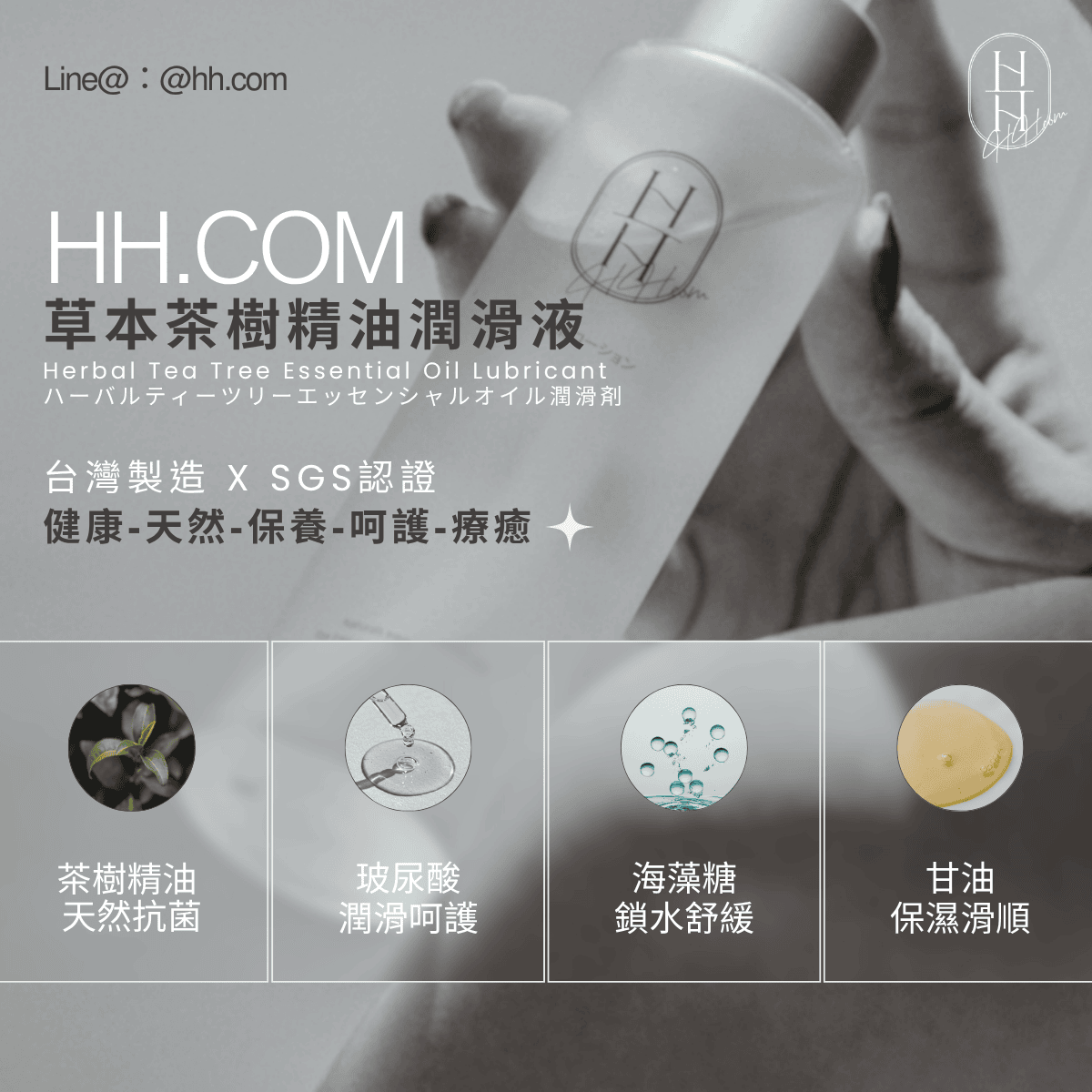
Why / How: In general, intimate cleansing should focus on the outer skin only, using water and a gentle cleansing product if needed. There is no need to over-focus on removing all odor or sterilizing excessively. After cleansing, it is also important to stay dry and reduce trapped heat or moisture. In addition to cleansing, if you often feel friction, dryness, or want to improve comfort during use, you may also choose a gentle moisture-support product with a clear purpose. For example, HHcom Tea Tree Hyaluronic Acid Lubricant can be used for everyday comfort support and intimate interaction, and it provides SGS testing information for 8 heavy metals, 7 plasticizers, Candida albicans, and pH value for added reassurance when choosing.
How Should Women Care for Intimate Areas? A Complete Guide to Cleansing, Care, and Everyday Comfort

Comfort tip:

Products that come into intimate contact and adult toys should always be cleaned properly before and after use. If you use lubricant, material compatibility also matters. In general, oil-based lubricant is not recommended with adult toys because it may affect the material and shorten product lifespan.

From the HHcom Editorial Team

One of the most common misunderstandings about intimate cleansing is treating it like something that should be washed until it leaves no trace at all. But real comfort usually comes from moderation and stability, not from overdoing it. The gentler and more consistent the care, the easier it is to build a healthy long-term rhythm.

How Should You Choose Intimate Care Products? Understanding Purpose, Material, and Transparency

What: Intimate care products may look diverse, but the logic for choosing them is actually very consistent. First, ask yourself what you care about most: cleansing, moisture, comfort management, or emotional relaxation. Then look back and judge whether the product truly answers that need.

Why / How: There are four useful directions when choosing. First, whether the product’s purpose is clear: is it for cleansing, moisturizing, comfort support, or something else? Second, its material and contact feel, especially since intimate products need stronger attention to skin-friendliness and cleaning convenience. Third, whether the brand provides enough information, such as usage purpose, instructions, storage conditions, and testing data. Fourth, whether the product really fits into your life instead of becoming something you stop using quickly.

If you also want to bring pelvic floor training into everyday women’s care, you may explore Mist Veil | Kegel Smart Ball to make body training and comfort management feel more consistent and natural.

Comparison Item Cleansing Intimate Care Products Moisture & Comfort Intimate Care Products Training Support Products
Main purpose Maintain daily cleanliness and freshness Improve comfort and reduce friction-related discomfort Build pelvic floor and body care habits
Best for Those who want a gentle cleansing routine Those prone to dryness who value smoothness and comfort Those who want to care for pelvic floor health more consistently
What to focus on Gentle ingredients, clear purpose, simple use Material safety, pleasant texture, transparent information Moderate size, natural feel, easy habit-building
Common mistake Over-cleansing and over-deodorizing Only looking at packaging and sensation descriptions while ignoring testing data Buying one but never building a consistent usage rhythm

From the HHcom Editorial Team

For HHcom, premium intimate care is not about using the most polished or dramatic language. It is about whether a product is truly willing to respond to women’s real needs. When a product is easy to understand, easy to use, and transparent about materials and information, it is much more likely to become a trusted long-term care companion.

A Broader View of Women’s Intimate Care: Real Care Means Bringing Comfort Back Into Daily Life

What: The real value of women’s intimate care is not only responding to discomfort in the moment. It is about making prevention, observation, adjustment, and care a more natural part of life.

Why / How: When women begin to understand their body rhythm more clearly, it becomes easier to know when to rest, when moisture support may help, when irritation should be reduced, and when discomfort needs professional support. This is not about making women manage themselves with more anxiety. It is about making self-care gentler, clearer, and more within their own control.

For brands, intimate care should not be about building products only through packaging and trends. It should genuinely respond to women’s expectations around material safety, information transparency, psychological comfort, and aesthetics. That is also why HHcom continues to place “premium, pure, women-friendly, intimate wellness, and mind-body relaxation” at the center of both product selection and content.

Comfort tip:

If you are just starting to build an intimate care routine, you do not need to create a complete product list all at once. Beginning with one product that most improves your daily comfort is usually the easiest way to build a routine that truly lasts.
HHcom Featured Pick

HHcom Tea Tree Hyaluronic Acid Lubricant

If you want to begin practicing women’s intimate care in daily life, moisture and comfort support can be a very approachable first step. Products like this help reduce friction discomfort and turn intimate care from an idea into something that genuinely fits into everyday life.

Reference price: please check the official website for the latest price
Before you buy:

1. Intimate care products are not always better simply because they offer more functions. What matters is whether they fit your real current need.
2. For intimate-contact products, prioritize material safety, cleaning method, and usage instructions.
3. For moisture-support products, it is best to check ingredient transparency and whether the brand provides complete testing information.
4. For training-support products, pay attention to size, user experience, and whether they are easy to make part of a regular routine.
5. If you already have ongoing pain, discomfort, or unusual symptoms, intimate care products can be supportive, but they cannot replace professional medical judgment.

Frequently Asked Questions

What is women’s intimate care?
Women’s intimate care refers to daily cleansing, comfort support, moisture care, and lifestyle adjustments for the skin around the vulva. The key is gentleness, reducing irritation, and maintaining comfort.
How should intimate areas be cleaned properly?
Intimate cleansing should focus on the outer skin only, using water and a gentle cleanser if needed. It is best to avoid excessive rubbing, over-deodorizing, or harsh products. Staying dry afterward is also an important part of care.
Who should consider starting intimate care products?
Anyone who wants to reduce dryness, friction, heat, or daily discomfort—or simply wants a more complete intimate care routine—can benefit from intimate care products. You do not have to wait until the discomfort becomes severe.
Is more care always better?
Not necessarily. What matters more is whether the product is gentle, fits your lifestyle rhythm, and can be used consistently. A simple routine you can maintain usually has more value than a complicated one you cannot keep up with.
How is women’s intimate care different from general skincare or body care?
Women’s intimate care places more emphasis on skin contact feel, material safety, cleaning methods, and information transparency. It also adapts to women’s different lifestyle situations rather than simply focusing on a “clean feeling” or fragrance performance.

Start with women’s intimate care and build a gentler self-care system for yourself

Intimate care is not about doing more. It is about knowing how to care for yourself better. Starting with one product that truly fits you is already enough.

Explore Featured Products

Start with the featured products mentioned in this article and quickly find a first option that suits you.

Learn More

Browse Collection

Explore more HHcom products by material, need, and usage scenario.

Visit Shop

Read More

Continue exploring intimate care, relaxation, and women’s wellness topics.

Keep Reading

Further Reading

Similar Posts

  • |

    Five Types of Women’s Health Technology Products and a FemTech Guide

    Recommended Women’s Health Technology Products: 5 FemTech Categories, Who They Are For, and What to Look For

    Reviewed by the HHcom Editorial Team

    |

    Last updated: 2026-03-09

    Quick Take in 30 Seconds: FemTech Made Simple

    Best for: Women who care about intimate wellness, cycle tracking, pelvic floor care, stress relief, and making everyday self-care more efficient.

    Core value: Using technology to help women understand their bodies, build consistent care habits, and improve comfort and quality of life.

    Shopping reminder: When choosing FemTech products, look at function design, material safety, usage scenario, data tracking style, and brand transparency at the same time.

    What is FemTech? This article highlights five recommended types of women’s health technology products and helps you understand what to look for when choosing cycle tracking tools, pelvic floor training products, intimate wellness items, and women’s relaxation products. As women’s health is no longer confined to a single frame of medicine or supplements, FemTech has gradually become a field that deserves wider understanding. It is not just a cold technology term. It is a design mindset that puts women’s real needs at the center. From cycle tracking and pelvic floor training to intimate comfort management, emotional relief, and self-care, technology is giving women more opportunities to understand and care for their bodies at their own pace, while responding more comfortably to different stages of life. For HHcom, the value of women’s health technology is not about making care more complicated. It is about making everyday care gentler and more structured. If you are looking for intimate care and relaxation products that suit you better, you can start with the HHcom full product collection and explore options by material, function, and usage scenario.

    Understanding FemTech First: Not a Trend, but Women’s Needs Finally Being Seen

    In the past, many health technology products were designed with the idea of a “general user” in mind. But women’s needs around menstruation, hormonal changes, pelvic floor support, intimate comfort, and emotional stress are often much more nuanced.

    The emergence of FemTech brings these previously overlooked body experiences back into the center of design. It may be a smart tracking app, a training tool that helps build care habits, or an intimate wellness item that places stronger focus on material safety and user comfort.

    For consumers, the most important meaning of FemTech is not simply that it is “more advanced,” but that it helps women understand more clearly what they need, how to care for themselves, and which tools are genuinely useful.

    What Is FemTech? How Women’s Health Technology Changes Everyday Care

    What: FemTech stands for Female Technology and refers to products and services designed around women’s health, quality of life, and body needs. It covers a wide range of categories, including cycle tracking, ovulation and hormone management, pelvic floor training, intimate wellness, fertility and pregnancy support, emotional relaxation, and menopause care.

    Why / How: Women’s body experiences are rarely shaped by a single factor. They are influenced by physiology, emotions, lifestyle, and environment all at once. The value of FemTech lies in turning scattered needs into everyday actions that can be observed, tracked, and improved. For example, when you can track your cycle consistently, it becomes easier to understand your body rhythm. When you use suitable training products or intimate care tools, it becomes easier to build a comfortable and organized care routine.

    From the HHcom Editorial Team

    For HHcom, what makes FemTech truly appealing is that it does not push women to manage themselves with more anxiety. Instead, it helps women understand their bodies in a gentler and more supportive way. Truly good women’s health technology should not make you feel monitored. It should make you feel understood.

    5 Recommended Types of Women’s Health Technology Products: From Tracking to Care, Building a More Complete Self-Care Rhythm

    What: If you want to understand FemTech in the most practical way, it helps to begin with five types of women’s health technology products that are common in daily life and relatively easy to start with. These products do not always look like traditional “tech products,” but they share one common logic: using design that is closer to women’s actual needs to reduce everyday discomfort and improve care efficiency.

    Why / How: Here are five categories worth paying attention to:

    1. Cycle Tracking and Body Rhythm Tools

    These tools help users record menstruation dates, body conditions, mood fluctuations, and lifestyle patterns, making body rhythms that once felt vague much easier to observe. Their value is not just in reminding you of dates, but in helping women better understand their own cycle.

    2. Pelvic Floor Training and Kegel Support Products

    Pelvic floor support is closely tied to women’s sense of comfort, and well-designed training products can help users build a more intentional and consistent practice. If you would like to begin in a gentler way, you can also explore Mist Veil | Kegel Smart Ball, which helps make pelvic floor training feel more approachable and easier to integrate into everyday life.

    3. Intimate Comfort Management and Moisture Care Products

    FemTech is not limited to hardware devices. It also includes everyday products that help make intimate comfort more stable. Moisture-support products and gentle daily support items are an important extension of women’s health technology into daily care. If you care about material safety and product transparency, you may also want to look at HHcom Tea Tree Hyaluronic Acid Lubricant as a softer way to care for intimate comfort.

    4. Women’s Relaxation and Relief Technology Products

    When stress and fatigue become part of daily life, relaxation should not feel like a luxury. It should be part of wellness management. From quieter and easier-to-use relaxation tools to products designed around women’s comfort and emotional rhythms, this category helps make care feel more naturally integrated into everyday life.

    5. Smart Connected Women’s Health Products

    These products often combine apps, data recording, or personalized guidance to help users track frequency, build routines, and better understand how their body may feel under different conditions. For those who value data and consistency, smart connected products can offer stronger engagement and better self-management efficiency.

    Comfort tip:

    You do not need to buy many FemTech products all at once. The most important thing is to begin with the one that is closest to your current need. For example, if you want to improve daily comfort, intimate care products may be the best starting point. If you want to build a training habit, pelvic floor-related products may be a better first step.

    From the HHcom Editorial Team

    The idea of “five key women’s health technology products” is not about surrounding women with more features. It is about helping you identify the area where you most need support. Truly good FemTech does not make life busier. It helps you keep a little space for yourself, even inside a busy routine.

    How to Choose FemTech Products: Understanding Function, Material, and Brand Transparency at a Glance

    What: FemTech products may seem highly diverse, but the selection logic is actually quite consistent. First, identify your core need. Then look back and ask whether the product truly helps solve that need, rather than simply being attracted by appearance, trends, or a long list of features.

    Why / How: You can judge a product from four directions. First, whether its function is clear: is it for tracking, training, relaxation, or comfort support? Second, its material and contact feel, especially for intimate products where material safety and ease of cleaning matter more. Third, whether the brand provides enough information, including purpose, usage instructions, storage conditions, and testing data. Fourth, whether it genuinely fits into your life rather than becoming something you stop using shortly after purchase.

    For intimate comfort management products, transparency is especially important. For example, if a brand openly provides test details, ingredient labeling, and usage precautions, that usually builds more reassurance. HHcom Tea Tree Hyaluronic Acid Lubricant includes SGS testing information for 8 heavy metals, 7 plasticizers, Candida albicans, and pH value. Information like this is not only about looking professional. It is also a meaningful part of purchase evaluation.

    Comparison Item Tracking FemTech Training FemTech Comfort & Care FemTech
    Main purpose Track cycle and body changes Build muscle training and care habits Improve intimate comfort and daily relaxation
    Best for Those who want to understand body rhythm better Those who want to build a training habit Those who value comfort and a soothing feel
    What to look for Easy interface and clear records Natural feel and long-term usability Material safety, ingredient transparency, gentle experience
    Common mistake Recording a lot but never reviewing or understanding it Buying it but never building a consistent rhythm of use Only focusing on packaging and sensation claims while ignoring information transparency

    From the HHcom Editorial Team

    For HHcom, the true premium quality of FemTech is never about stacking up more features. It is about every detail responding to women’s real needs. When a product looks good, is easy to understand, comfortable to use, and is also transparent about materials and product information, only then does it truly deserve to become a long-term part of women’s daily lives.

    A Broader View of FemTech: Women’s Health Technology Is Not Just a Product, but a New Lifestyle Attitude

    What: The development of FemTech means that women’s health is no longer something addressed only after a problem becomes obvious. Instead, it increasingly enters a daily rhythm of prevention, observation, adjustment, and care. It allows women to become more proactive instead of only seeking help after long periods of endurance.

    Why / How: When women begin to understand their bodies through technology, it becomes easier to know when to rest, when to practice, when to add comfort support, and when discomfort may require professional guidance. This is not about making women more dependent on tools. It is about allowing tools to become a bridge to self-understanding.

    For brands, FemTech should not be just another way to package products using women’s issues. It should truly respond to women’s expectations around material safety, information transparency, aesthetics, and emotional comfort. That is also why HHcom continues to place “premium, pure, women-friendly, intimate wellness, and mind-body relaxation” at the core of both product selection and content creation.

    Comfort tip:

    If you are new to FemTech, you do not need to chase the most complete setup right away. Starting with just one product that improves the part of daily life you care about most is usually the easiest way to build a self-care habit that truly lasts.
    HHcom Featured Pick

    Mist Veil | Kegel Smart Ball

    If you want to begin bringing FemTech into everyday practice, pelvic floor care can be an excellent first step. Products like this help build a more intentional body training rhythm, turning women’s health technology from an abstract idea into a real care routine that fits into daily life.

    Reference price: please check the official website for the latest price
    Before you buy:

    1. More functions do not always mean a FemTech product is more suitable. What matters is whether it fits your real current need.
    2. For intimate-contact products, prioritize material safety, cleaning method, and usage instructions.
    3. For care-focused products, check ingredient transparency and whether the brand provides complete information.
    4. For tracking products, pay attention to whether the recording method is simple and sustainable for long-term use.
    5. If you already have ongoing pain, discomfort, or unusual symptoms, FemTech can be a supportive tool, but it cannot replace professional medical judgment.

    Frequently Asked Questions

    What does FemTech mean?
    FemTech stands for Female Technology. It refers to technology products and services designed around women’s health and daily life needs, including cycle tracking, pelvic floor training, intimate wellness, and relaxation support.
    What are the five major types of women’s health technology products?
    The most common and useful five categories include cycle tracking tools, pelvic floor training products, intimate comfort management products, women’s relaxation products, and smart connected women’s health products.
    Who should start using FemTech products?
    Anyone who wants to better understand her body rhythm, build care habits, improve intimate comfort, or bring more structure into daily self-care can benefit from FemTech. You do not need to wait until discomfort becomes obvious.
    Are smarter women’s health products always better?
    Not necessarily. What matters more is whether the product is easy to understand, easy to use, and fits your life rhythm. A product that can be used consistently is usually more valuable than one that looks impressive but ends up sitting unused.
    How is FemTech different from general women’s care products?
    FemTech places stronger emphasis on a design logic centered on women’s needs. In addition to the product itself, it also values tracking, interaction, habit-building, transparency, and the overall user experience. It is not just about care. It is a broader women’s health lifestyle solution.

    Start with FemTech and build a gentler care system for yourself

    Women’s health technology is not a distant concept. It is a way to understand yourself, care for yourself, and make daily life more comfortable. Starting with one product that genuinely suits you is already enough.

    Explore Featured Products

    Start with the products mentioned in this article and quickly find a first item that may suit you.

    Learn More

    Browse Collection

    Explore more HHcom products based on material, need, and usage scenario.

    Visit Shop

    Read More

    Continue exploring topics related to intimate care, relaxation, and women’s wellness.

    Keep Reading

    Further Reading

  • |

    How to Choose Your First Toy

    How to Choose Your First Toy: Vibrator vs. Suction Toy Guide

    HHCOM Women’s Wellness Journal|Beginner Buying Guide|FemTech

    If you have no sexual experience at all, it can feel hard to place an order for your very first pleasure product. This article is here to help complete beginners understand what kind of choice may actually suit them.

    Hi, I’m Joe, founder of HHCOM. HHCOM is a Taiwanese FemTech pleasure brand for women. We take women’s self-exploration seriously, and we believe that every woman deserves a guide that clearly explains the differences before buying her first intimate product.

    This article is designed to help you understand the real difference between vibrators and suction toys, which one may suit you better right now, and whether there is a product that lets you try both.

    First, let’s clear up four of the most common beginner myths

    When someone buys their first vibrator and feels nothing, it is not necessarily the toy’s fault. Very often, it starts with the wrong expectations.

    Myth 1: A clitoral orgasm is not a “real” orgasm

    This is one of the most common misconceptions, and it strongly affects how beginners shop. Many people assume that only penetration or deep internal stimulation counts as a “real orgasm,” while an external vibrator is just a kind of foreplay support.

    But physiology tells a different story. The clitoris contains more than 8,000 nerve endings and is one of the most densely innervated parts of the human body. Multiple studies in sexual health research suggest that more than 70% of women primarily reach orgasm through clitoral stimulation rather than penetration.

    Myth 2: If I do not react strongly, something is wrong with my body

    Feeling very little the first time is completely normal. The body needs time to adapt to a new kind of stimulation, and your mental state—such as nervousness, lack of relaxation, or not feeling safe in your environment—directly affects how you feel. Some people only begin to understand their response on the second or third try. Others only discover what works after changing the area or the type of stimulation. “No response” is almost never a sign that something is wrong with your body. It usually just means you have not found the right method yet.

    Myth 3: The stronger the intensity, the better the result

    Starting immediately on the strongest setting often backfires. If the stimulation exceeds your comfort threshold, the body can shift into a defensive mode and become numb instead. Most experienced users recommend starting from the lowest level, letting the body adapt slowly, and then adjusting gradually. The purpose of multiple intensity levels is not to compete over strength. It is to help you find your own rhythm.

    Myth 4: If it is not inserted, it is not a complete experience

    External use and internal use are two completely different pathways of experience. Neither one is more complete than the other. Many people prefer external stimulation for their entire lives, and that is completely normal.

    For complete beginners, we usually suggest starting with an external product first. Learn how your body responds to external stimulation, and then explore internal vibrating toys later if you become curious.

    Vibrator vs. suction toy: how different do they actually feel?

    Vibrator: the most intuitive kind of external stimulation

    A vibrator uses a motor to generate vibration and applies it directly to the external surface of the clitoral area, creating a focused, firm, rhythmic sensation. You can control the pressure, angle, and exact position of contact. For people who like stimulation that feels clear, defined, and direct, a vibrator is often the first choice.

    There is almost no learning curve. You pick it up, turn it on, and use it.

    Suction toy: a completely different kind of experience

    With a suction toy, vibration is mainly secondary. The real core is pulsating air pressure. It works more like an “air massage,” simulating a sensation closer to oral suction. The nozzle covers the clitoral area, while the airflow creates a vacuum-like effect that surrounds the entire sensitive zone.

    This is very different from a vibrator. Some people feel nothing with a vibrator and only discover a new world when they try a suction toy. Others feel the opposite and find vibration more direct and satisfying than airflow.

    The only real learning point is nozzle placement. If the opening does not seal properly around the clitoral area, air will leak and the sensation drops significantly. Once you find the right position, most people get used to it after a few tries.

    Comparison Vibrator Suction Toy
    Stimulation style Direct vibration on the external clitoral area Air pulses surrounding the clitoral area, without direct friction
    Sensation Firm, focused, rhythmic Soft, diffused, like a gentle sucking sensation
    Good for beginners? ✓ Very suitable ✓ Very suitable
    Ease of use Almost no learning curve Needs the nozzle to be positioned correctly
    Noise level Lower (pure vibration) Slight airflow sound (a physical limitation)
    Suggested example HHCOM Yun Zhi Shan (warming + vibration) HHCOM Hai Zhi Yin (suction + vibration)

    What kind of person are you? Three questions to narrow it down

    Q1 Are you more curious about suction or vibration?

    If you already have an intuitive preference, follow that instinct. If you are completely unsure, try a model that includes both. That is exactly the design logic behind HHCOM Hai Zhi Yin: one toy that lets you try both suction and vibration, so you can decide for yourself which feels more natural.

    Q2 Is your living environment quiet?

    Living with family or sharing a home with roommates is a reality for many women in Taiwan. Because suction toys rely on airflow, they are naturally a little louder than pure vibration toys. That is a physical limitation worth considering before buying. HHCOM Hai Zhi Yin is currently one of the quietest models in the HHCOM lineup, with noise below 50 dB. With the door closed, it is barely noticeable.

    Q3 Are you interested in internal use?

    External toys such as vibrators and suction toys focus on the clitoral area, while internal toys are designed to target the G-spot, often with a slightly curved body to match the angle of the front wall. The sensations are very different. You do not need to decide all at once which is “better.” You can begin with external stimulation, learn how your body responds, and only then decide whether you want to explore internal toys.

    If you still cannot decide, try the one that gives you both

    One of the core ideas behind HHCOM’s product design is to stop you from getting stuck over which type of stimulation to choose.

    Many beginners hesitate for a long time between vibration and suction, buy one, realize it is not the right fit, and then have to start researching all over again. HHCOM’s design thinking is simple: let you figure it out within a single toy.

    HHCOM Hai Zhi Yin | Suction + Vibration 2-in-1 | Best first choice for beginners

    Hai Zhi Yin is one of the easiest-entry models in the HHCOM series. It is compact in size (110×45×36mm) and weighs only 86.6g, so it feels light and easy to hold. It offers 10 suction levels and 10 vibration patterns, which can be used separately or together.

    Its hooked tail design follows ergonomic principles, allowing it to naturally fit the clitoral area without twisting your wrist. Its below-50 dB quietness is also one of the reasons it is so often recommended by people who live with others. With IPX6 water resistance, it can also be used during a bath or shower.

    Product details

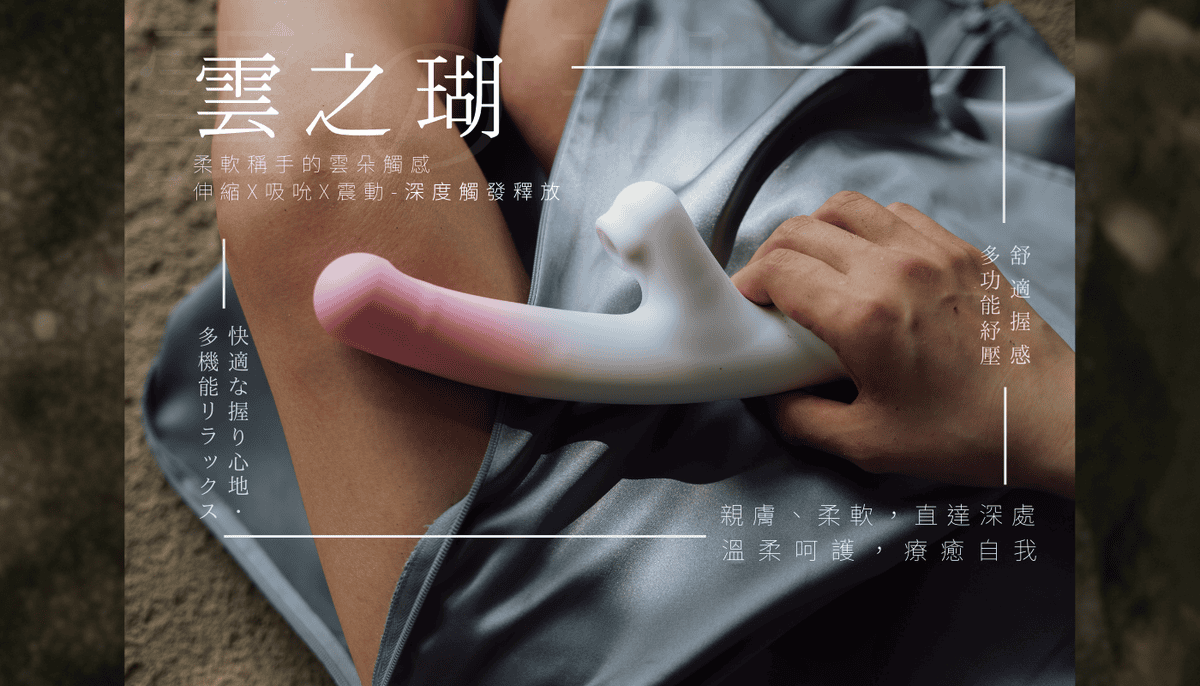
    HHCOM Yun Zhi Shan (Cloud Wand) | Suction + Vibration + Smart Warming 3-in-1 | The all-around choice

    HHCOM’s flagship model from Taiwan’s FemTech category uses food-grade liquid silicone and delivers the tactile experience that online communities describe as “holding a cloud.” When you press into it, the softness and rebound feel strikingly different from the firmer silicone commonly found on the market. That is why Yun Zhi Shan has earned the nickname “Cloud Wand.”

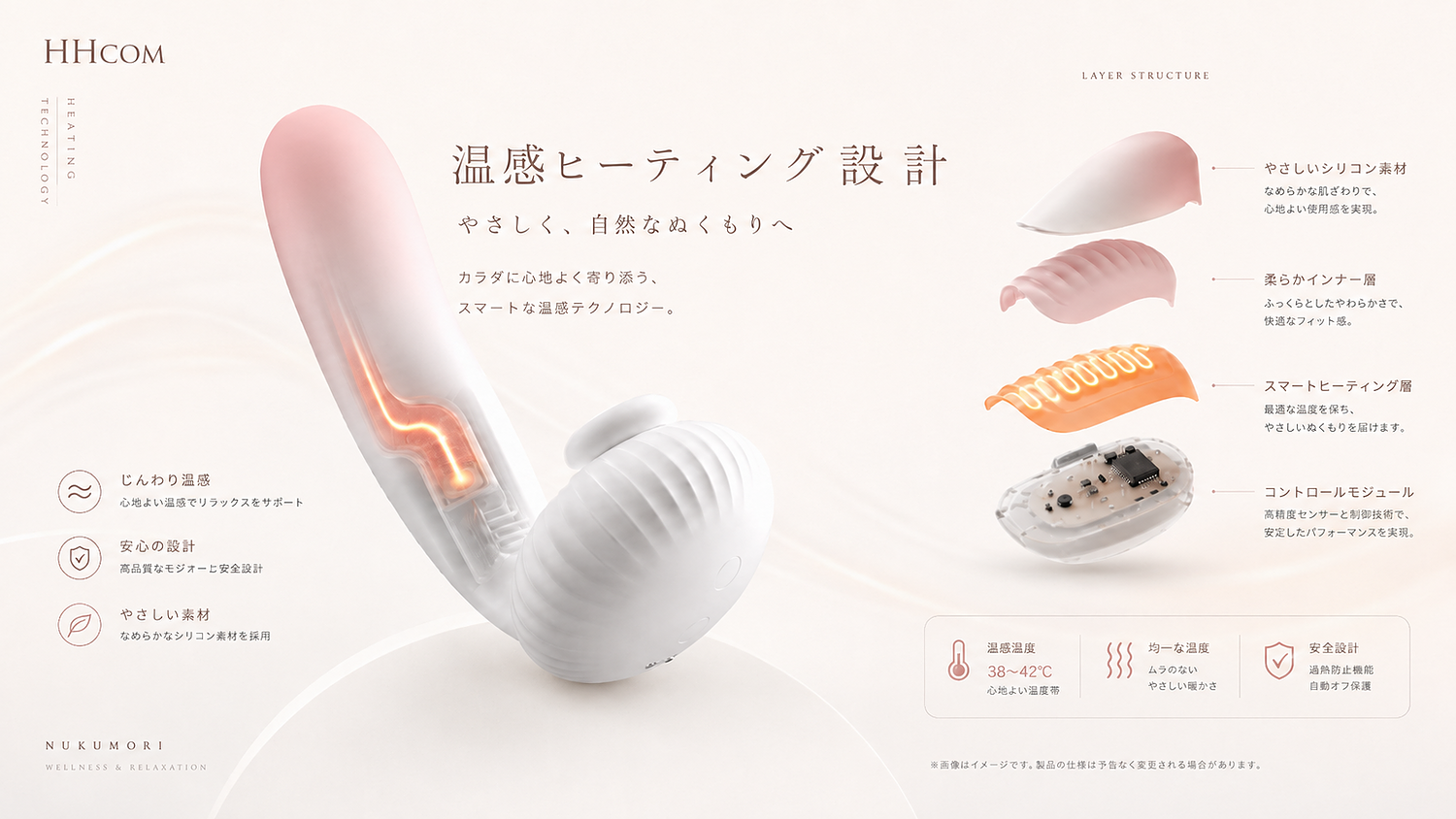
    Its 3-in-1 design combines suction, vibration, and smart warming at a body-like 37°C, so it does not feel cold in winter. The overall appearance is understated and refined, and both the packaging and design avoid the obvious look of a sex toy. For people who care about discreet storage and a lower sense of awkwardness, that is a meaningful advantage.

    Product details

    Further reading

    [2026 Selection] 10 Stylish Vibrators for Women: How to Choose + Dcard and PTT Reviews

    Browse the collection
    Explore the full HHCOM lineup
    From beginner-friendly choices to deeper exploration, find the first one that fits you best.
    Read more
    More women’s wellness articles
    Learn more about body exploration, intimate care, and FemTech product knowledge.
    Learn more
    See the beginner-friendly series
    Start with gentler, lower-pressure, easy-to-use designs and find your own pace.
  • |

    A Complete Guide to Female Orgasm Exploration

    A Complete Guide to Female Orgasm Exploration

    Reviewed by the HHCOM Editorial Team

    |

    Last updated: 2026-03-24

    30-Second Summary: Female Orgasm Exploration at a Glance

    Best for: Women who are just beginning self-exploration, are unfamiliar with orgasm sensations, or have tried before but felt “nothing.”

    Key idea: Let go of performance anxiety, create a safe environment, and begin by understanding 8 common pleasure zones and 8 gradual exploration methods.

    Beginner reminder: Orgasm is not a test. There is no fixed speed, no “correct” reaction, and no standard answer. Feeling safe and relaxed matters far more than rushing toward a result.

    Maybe you have tried masturbating a few times but still felt almost nothing. Sometimes it seems like you are getting close, only for the feeling to disappear again. Eventually, you may even start wondering whether something is wrong with your body. In reality, many women are not “unable to feel” pleasure — they simply have not yet discovered the rhythm and method that suit them best.

    Hi, I’m Joe, founder of HHCOM. HHCOM is a Taiwanese FemTech pleasure and wellness brand that takes women’s body exploration seriously. This article is not here to rush you into a checklist of techniques. Instead, we want to begin with the very first step of body awareness by introducing 8 common pleasure zones and 8 more intentional ways to explore. If you would also like to browse more curated options, you can visit the HHCOM full collection.

    One thing to remember first: orgasm is not a performance — it is a sensation

    When many people explore their bodies, they are not truly feeling — they are operating and observing themselves at the same time, silently judging: Am I too slow? Am I not sensitive enough? Is something wrong with me?

    But the body does not open through pressure. What actually helps is not forcing orgasm harder, but letting your brain understand: I am safe, I can relax, and I do not need to perform for anyone.

    Mental Preparation Before You Begin

    Most articles about female orgasm exploration quickly jump into “how to touch” or “how to stimulate.” But before technique, there is something even more important: why so many people feel pressure, frustration, or self-doubt from the very beginning.

    1. The feeling of “performing” is a major block

    Even when alone, many people still feel as if an invisible audience is watching. You may start judging whether your reactions are obvious enough, or whether taking “too long” means you are failing. This self-monitoring keeps the nervous system slightly guarded, and a guarded body does not relax easily into pleasure.

    2. The harder you chase orgasm, the further it may feel

    The more urgently you try to “get there,” the harder it often becomes. This is not mystical — it is how the nervous system works. When you force yourself to focus on finding a result, you shrink the space for sensation. A better approach is to focus on touch, breathing, and the tiny changes in your body, then let your body guide the rest.

    3. Exploration needs a sense of safety

    A few practical things that help:

    • Make sure the space feels private
    • Put your phone on silent
    • Choose a time when you are not in a rush
    • Tidy your bed or room so the space feels comforting
    • Adjust lighting, temperature, and clothing so your body can relax

    The Body Map: 8 Common Pleasure Zones

    Understanding your body is the first step in exploring orgasm. Everyone’s pleasure map is different, so think of this as a starting guide rather than a universal rulebook.

    1. The brain — the most powerful sex organ

    Arousal often begins in the brain. Fantasy, emotional atmosphere, and anticipation all help prepare the body for pleasure. If you need time to mentally arrive before using your fingers or a toy, that is completely normal.

    2. Nipples and areola

    For some people, nipple stimulation creates sensations that echo through the lower abdomen. Start by touching around the areola gently rather than going straight for the nipple, then slowly build intensity as the area warms and becomes more responsive.

    3. The clitoris — the most direct route to orgasm

    The clitoris contains a very high density of nerve endings, which is why it is the most accessible path to orgasm for many women. Gentle circles are often a good place to start. Some people prefer indirect stimulation through the clitoral hood, while others enjoy more direct contact.

    4. Inner thighs and groin

    This area is ideal for building anticipation. Lightly tracing upward along the inner thighs and pausing just before direct contact can create a powerful “almost there” tension that feels intensely exciting for many people.

    5. The G-spot

    Usually located on the front vaginal wall about 4–7 cm inside, this area may feel slightly textured compared to the surrounding tissue. At first, stimulation here may feel more like fullness or pressure than immediate pleasure, which is very common.

    6. The A-spot

    Located deeper along the front wall near the cervix, the A-spot can feel like a fuller, more diffused form of internal pleasure. It is usually better explored after you already have some familiarity with your internal sensations.

    7. The cervix

    Some people enjoy cervical contact, while others find it uncomfortable. Without enough arousal and lubrication, it usually does not feel good. If you are curious, explore very gently and only after your body is fully warmed up.

    8. Around the urethral opening

    This area can be sensitive in a unique way and should always be explored with great gentleness and enough lubrication. For some people, the pressure here can feel surprisingly distinct and interesting.

    8 Ways to Explore Female Orgasm

    Effective exploration is not about using the most complicated method. It is about finding what helps your body stay present and responsive. Here are 8 approaches you can try.

    8 ways to explore female orgasm

    1. Start externally with the clitoris

    This is one of the best starting points for beginners. Clean fingers are enough. Begin with light circles around the clitoral area and, once you find a rhythm that works, try to keep it steady instead of constantly changing speed or pressure.

    2. Friction through fabric

    Stimulation through underwear can soften intensity and make the sensation more approachable, especially for people who find direct touch too strong at first.

    3. Pillow or cushion grinding

    Holding a pillow or folded blanket between your thighs and moving against it can involve the whole pelvis, creating a more full-body rhythm than fingers alone.

    4. Showerhead water flow

    A comfortable water stream can provide stable, fatigue-free stimulation. Aim near the area first rather than directly at the most sensitive point.

    5. Finger exploration of the G-spot

    Using one or two fingers, palm facing up, make a slow “come here” motion along the front vaginal wall. Plenty of lubrication and patience matter more than force.

    6. Dual stimulation

    Stimulating the clitoris and exploring internally at the same time can create a very different intensity. It may take practice to coordinate, so do not expect perfection right away.

    7. Add nipple stimulation

    Once you are already somewhat aroused, combining clitoral touch with nipple stimulation may deepen the experience for some people.

    8. Use fantasy as support

    Arousal often responds to atmosphere and imagination. A mental scene that feels exciting to you can help your body engage more naturally. There is nothing wrong with that — fantasy is a healthy part of many people’s sexual experience.

    When to Introduce a Toy — and How to Choose One

    The advantage of a pleasure toy is stable, repeatable stimulation. But if you rely on a toy before understanding your own preferences, it may become harder to identify what your body actually enjoys. A helpful order is: first explore with your hands, then let a toy strengthen the sensation you already know you like.

    What you want Recommended direction Why it helps
    Start with external clitoral stimulation Beginner-friendly external vibrator Simple and easy to focus on sensation
    Your fingers tire easily or rhythm changes too much Steady vibration tool Keeps stimulation consistent
    You want clitoral and internal stimulation together Dual-stimulation toy Reduces coordination effort
    You are still unsure about internal exploration Begin externally first Build comfort and body awareness gradually

    Choosing a toy can actually be simple: pick a design that matches the area you most want to explore.

    Before you explore:

    1. Orgasm does not need to happen every time, and “not feeling much” does not mean something is wrong.
    2. Prioritize privacy, comfort, and relaxation, especially if it is your first time exploring.
    3. For internal exploration, pay attention to lubrication and comfort. Avoid pushing too hard.
    4. If a certain area feels clearly painful, stop instead of forcing it.
    5. If you have ongoing concerns about pain, discomfort, or sexual response, consider speaking with a gynecologist or qualified therapist.

    5 Common Questions About Orgasm Exploration

    Q1: I have tried many times and still feel very little. Is something wrong with my body?
    Usually, no. More often, the body is not yet relaxed enough, or the stimulation style has not matched your preferences yet.
    Q2: Does orgasm only “count” if there is penetration?
    No. Many women primarily reach orgasm through clitoral stimulation. Penetration is not a requirement and should never be treated as the only valid standard.
    Q3: How often is “normal” when it comes to self-exploration?
    There is no fixed answer. If it feels comfortable, wanted, and does not interfere with daily life, it can fall within a healthy range.
    Q4: What is squirting? Does everyone experience it?
    Squirting is a physiological response that some people experience under ongoing stimulation. Not everyone does, and it is not a measure of whether the orgasm was “better.”
    Q5: If I use a vibrator, will I stop responding to real-life intimacy?
    There is no clear evidence supporting that fear. In many cases, understanding your own body better can actually improve communication and intimacy in a relationship.

    Exploration Is a Practice, Not a Test

    Learning your body is a process. Some days you may feel a lot, and other days not much at all. Both are normal. Your body’s responses shift with your mental state, fatigue, hormones, and environment.

    Instead of treating orgasm like an exam, think of each exploration as a chance to understand yourself better. The more you learn what kind of touch, pace, and atmosphere suits you, the closer you move toward your own kind of pleasure.

    Start by understanding your body, then find your own rhythm of pleasure

    You do not need to be perfect right away, and you do not need to rush toward a result. Understanding yourself is already a meaningful first step.

    Explore Featured Products

    From beginner-friendly to more advanced options, find what fits your current stage of exploration.

    Learn More

    Browse the Collection

    Choose according to need, material, and usage preference across the HHCOM line.

    Shop Now

    Read More Articles

    Continue exploring topics on women’s wellness, intimate care, and self-discovery.

    Keep Reading

  • | | | |

    HHCOM Receives the Taiwan-Japan Outstanding Entrepreneur Award

    狂賀!HH.COM 創辦人榮獲「台日卓越創業家大賞」新創企業組殊榮

    At the recently concluded Taiwan-Japan Outstanding Entrepreneur Award, the founder of HH.COM stood out among many exceptional companies and was honored in the Startup Enterprise Category in recognition of the brand’s innovative business model and contributions to the women’s health industry. The award was presented by Motohide Goto, former mayor of Buzen City, Fukuoka Prefecture, Japan.

    Jiao Jiao Co., Ltd. has been honored with the prestigious “Taiwan-Japan Outstanding Entrepreneur Award,” a recognition that not only affirms the company’s relentless efforts and innovative spirit but also highlights its significant contributions to the economic exchanges and cooperation between Taiwan and Japan. Since its inception, the company has been committed to integrating Taiwan’s advanced technologies with the needs of the Japanese market, continually breaking through technological barriers and driving industrial upgrades. In both innovation and market expansion, Jiao Jiao Co., Ltd. has consistently maintained a leadership position in the industry, while also actively engaging in social responsibility to improve the well-being and quality of life of the people in both countries.

    What makes this achievement even more remarkable is that, after receiving the award, the company received congratulatory telegrams from both the President and Vice President of Taiwan, expressing high praise for its outstanding accomplishments. This recognition not only serves as an acknowledgment of the company’s exceptional performance but also underscores the Taiwanese government’s support and emphasis on the role of enterprises shining on the international stage. This award will undoubtedly further enhance Jiao Jiao Co., Ltd.’s competitiveness in the global market and inspire more businesses to pursue internationalization and innovation.

    Congratulatory Telegram from the President and Vice President of Taiwan
    Congratulatory Telegram from President Lai Ching-te and Vice President Lai Ching-te of Taiwan

    The success of Jiao Jiao Co., Ltd. is not only a testament to its entrepreneurial spirit and capabilities but also an inspiring example, proving that in the wave of globalization, Taiwanese businesses possess limitless potential and possibilities.

    The Taiwan-Japan Outstanding Entrepreneur Award was jointly organized by the Japan Entrepreneurs Association, the Chinese Industrial, Commercial, Economic and Technological Development Association, and the Taipei Chamber of Commerce at the NCCU Center for Public and Business Administration Education. The award aims to recognize outstanding entrepreneurs who demonstrate innovative thinking, a spirit of craftsmanship, and a commitment to strengthening industrial connections between Taiwan and Japan. This honor is not only a recognition of HH.COM’s past efforts, but also marks the first formal acknowledgment of our strategic development in cross-border Taiwan-Japan collaboration and FemTech innovation.

    HH.COM would like to share this award with every woman who is willing to acknowledge and embrace her own needs. This recognition belongs to all of us. Moving forward, HH.COM will continue to use this achievement as motivation to deepen cooperation with Japanese technical teams and introduce more high-quality products that combine ergonomic design with refined aesthetics. We remain committed to the highest standards of quality control, so that women in Taiwan can experience Japan’s most advanced approach to wellness, healing, and lifestyle at the same pace.

  • Your Intimate Fitness Coach — Rediscover Confidence with “Kiri”

    Your intimate fitness coach:
    Spend just 15 minutes a day with “Kiri” to regain firmness and confidence.

    About Kegel Exercises

    Have you ever heard of Kegel exercises, but still felt unsure about how to properly engage the muscles?
    Or perhaps after long hours of sitting or postpartum recovery, you feel that your intimate area is not as firm and toned as before?

    In fact, training your pelvic floor muscles is not only about pleasure — it is also a vital foundation for women’s health.

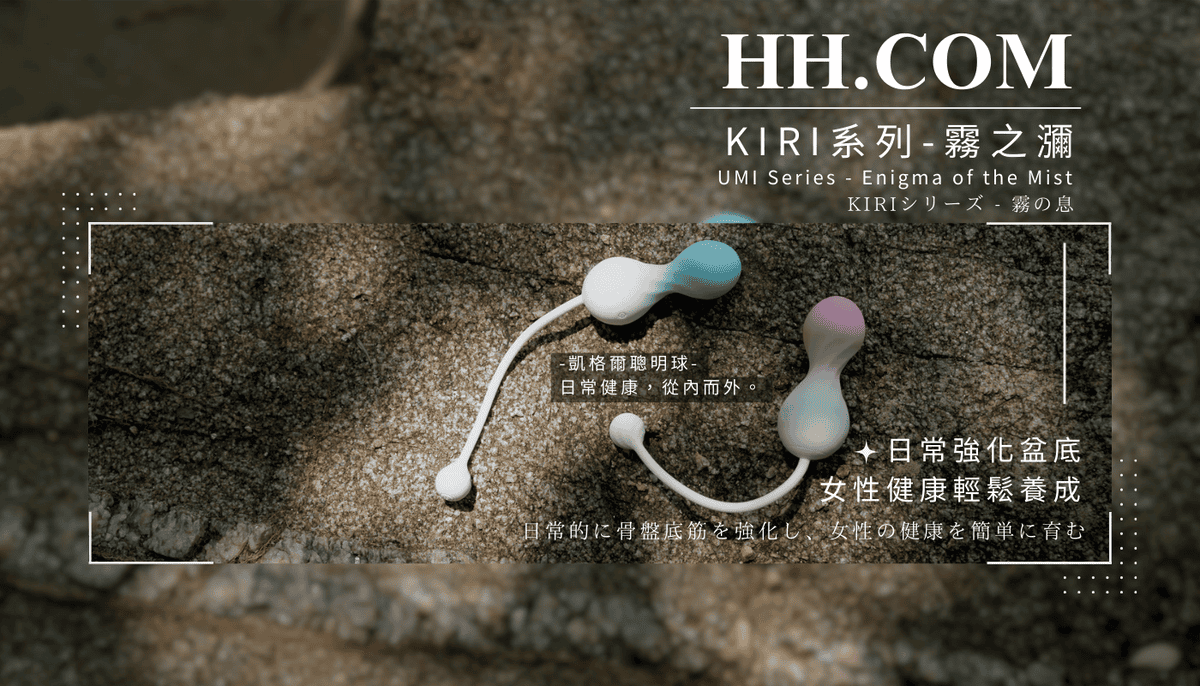
    [ Kiri ] is a “smart trainer ball” created for exactly this purpose.

    Unlike traditional training balls that may feel cold and mechanical, HHCOM listened to women’s needs and created a product specially designed for Asian women. It is made with skin-friendly liquid silicone, features an IPX7 waterproof design, and offers 10 vibration modes with varying levels of stimulation and contraction support.

    Through vibration feedback, Kiri helps guide you to engage the correct muscles, transforming what could be a repetitive exercise into a more enjoyable and supportive experience.

    When to use it

    You may be wondering — when is the best time to use it?
    The good news is that Kiri fits naturally into daily life. You can use it while showering, drying your hair, or even doing housework.

    With just 10–30 minutes a day, it may help support bladder control, improve looseness, and enhance inner sensitivity.

    This is not a corrective product, nor is it a strict medical device.
    Think of Kiri as a gentle yoga session for connecting with your body.

    Through gradual, step-by-step contraction training, you may discover how empowering it feels to slowly regain control of your body.

    Let Kiri accompany you on your journey to radiate confidence from within.

    → Click here to learn more about the product👉霧之瀰

  • |

    Why Does Female Intimate Dryness Happen?

     A Gentle Guide to Stress, Hormones, Cleansing Habits, and Everyday Care

    Reviewed by the HHcom Editorial Team
    |
    Last updated: 2026-06-01

    30-Second Summary: What Is Female Intimate Dryness?

    Best for: Anyone who has noticed dryness, friction discomfort, stinging during intimacy, or wants to understand intimate wellness and care.

    Key idea: Female intimate dryness is common and does not always mean something serious, but it is often connected to stress, hormonal changes, over-cleansing, unstable routines, and overall mind-body balance.

    Reading note: Dryness is not something to feel ashamed of. In many cases, it is simply your body saying: right now, I need more rest, care, and understanding.

    In reality, many women have experienced intimate dryness at some point. They just do not always talk about it openly. Some notice increased friction while walking during the day, some feel there is not enough smoothness during intimacy or even experience stinging, and others do not have obvious inflammation but still feel that the intimate area is drier, tighter, or simply less comfortable than before. These sensations do not always mean there is a serious problem, but they do deserve understanding. Female intimate dryness is often not caused by just one factor. It is more often the result of body condition, emotional stress, hormonal changes, cleansing habits, and daily care all interacting together. In this article, HHcom gently walks with you through why female intimate dryness happens, common reasons behind it, which care habits may actually make dryness worse, and how you can care for yourself in a softer, more supportive way. If you also want to explore product options from the perspective of intimate wellness and comfort, you can browse the HHcom full collection, where different materials, functions, and care needs may help you find what suits you better.

    What does female intimate dryness feel like? It is not just “not wet enough”

    When people talk about female intimate dryness, many immediately think it simply means “not enough moisture.” But the actual sensation is often more subtle than that. Some women feel more friction while walking or when their underwear touches the area. Others experience stinging, a dragging sensation, or discomfort during intimacy. Some do not feel obvious pain, but still notice that the area feels less soft, less flexible, or simply tighter and drier than before.

    In other words, dryness does not only show up during intimate moments. It can also show up as a decrease in everyday comfort. Many women initially wonder whether they are just being overly sensitive or imagining things, but the body is often very honest about changes in moisture and friction. When the balance of hydration and comfort is disturbed, you gradually begin to notice that things do not feel quite the same.

    So the first step in understanding intimate dryness is not to panic, but to honestly acknowledge that what you are feeling may be real. There is no need to force yourself to tolerate it, and no need to dismiss yourself as overreacting.

    HHcom Editorial View

    Many women do notice dryness—they just get used to overlooking themselves first. To HHcom, intimate dryness is not something embarrassing. It is simply your body reminding you that right now, it may not be receiving the care it needs.

    What are the common causes of female intimate dryness? It is not just about hormones

    When female intimate dryness comes up, many people immediately think of hormones. But in reality, the most common reasons are usually more than just one thing. One very common cause is stress, unstable routines, and lack of sleep. When the body as a whole is tense, the comfort of the intimate area can also be affected. Another common factor is hormonal fluctuation during different times such as the menstrual cycle, postpartum recovery, breastfeeding, or age-related changes. During these periods, it is natural for moisture levels to feel different than before.

    A third common cause is over-cleansing or using products that are not suitable. Cleansing products that are too strong, heavily scented, used too frequently, or simply not designed for the intimate area can make the environment drier and more sensitive instead of protected. A fourth factor is emotional and psychological strain. When someone lives with chronic anxiety, ongoing stress, or very little room to relax, the body also finds it harder to maintain a natural sense of comfort.

    In other words, female intimate dryness is often not just about one area “being wrong.” It is usually the result of overall body balance, lifestyle, and intimate care habits showing up together.

    Cause type Common situations Possible signs How to understand it
    Hormonal changes Before or after menstruation, postpartum, breastfeeding, age-related changes Reduced moisture, more friction These changes are common and not always abnormal
    Stress and routine Staying up late, fatigue, anxiety, constant tension Less comfort, more dryness during intimacy The intimate area can reflect overall mind-body condition
    Over-cleansing or unsuitable care Washing too much, using irritating products Dryness, itchiness, sensitivity, stinging Sometimes it is not about being unclean, but about washing too much

    HHcom Editorial View

    One of the easiest things to overlook about intimate dryness is that it is often not just a local issue. It can be a reflection of your overall life state. When you are chronically tired, tense, and not truly resting, many parts of the body may begin speaking for you first.

    Can stress, hormones, and emotional state really make the intimate area drier?

    Yes—and this is more common than many people realize. When you are under prolonged stress, the body often begins to postpone functions that are not immediately tied to survival. This does not mean the body is broken. It means the body is coping with pressure and fatigue in its own way. In that state, comfort, softness, moisture, and the general ability to relax in the intimate area may all become reduced.

    Hormones are another major factor. At different stages of life, women naturally experience changes in moisture due to menstrual cycles, postpartum recovery, breastfeeding, and age-related shifts. In other words, dryness is not always a sudden problem. Sometimes it is simply a natural response to the stage your body is currently moving through.

    Emotional state can intensify the feeling too. When you feel anxious, tense, or unable to relax, the body usually finds it harder to enter a soft, comfortable, receptive state. That is why some women who already feel a bit dry in daily life may notice even more discomfort during intimate moments.

    A gentle reminder:
    If you notice that dryness has become more obvious lately, it may be worth looking at your sleep, routine, stress level, and emotional state. Sometimes what truly needs care is not just one area, but your whole self.

    Which cleansing and care habits can actually make intimate dryness worse?

    Many women feel discomfort and instinctively think, “Maybe I should wash more thoroughly.” But sometimes the problem is not that the area is unclean—it is that it is being cleaned too aggressively. Washing multiple times a day, using strong cleansers, choosing heavily scented products, or relying too much on deodorizing and strongly antibacterial care items can all disturb the delicate balance that the intimate area needs.

    The intimate area is not healthier just because it is washed more often, and it is not healthier just because it smells stronger. What matters more is whether you are choosing a gentler, more skin-friendly approach, and whether you are avoiding prolonged heat, friction, and overstimulation in that area. For many women, changing habits that look like “care” but are actually too harsh can gradually reduce the feeling of dryness.

    So when you wonder what to do about female intimate dryness, the answer may not be doing more. It may be pausing and asking: am I washing too much, interfering too much, or overstimulating too much?HHcom茶樹潤滑液

    Care mistake reminder:
    Intimate care is not always better when it is more intense. If your current routine seems to make the area drier or more sensitive, it is worth reviewing whether your cleansing and care habits are too stimulating.

    How can female intimate dryness improve? Start with everyday care, relaxation, and the right products

    If intimate dryness is a recurring issue, the first step is not panic, but gentle daily care. This may include stabilizing your routine, reducing over-cleansing, choosing care products with simpler and gentler ingredients, minimizing fragrance and irritation, and checking whether the area is spending too much time in heat, friction, or trapped moisture. These sound basic, but for many women they are the most effective starting point.

    If dryness feels especially noticeable during intimacy, it may also help to use a lubricant with a gentle texture and more body-friendly ingredients to reduce friction and discomfort. This does not mean you are not engaged enough, nor does it mean there is something wrong with your body. It is simply a more mature way of caring for yourself. For many women, what matters more is not “Shouldn’t I naturally be wet enough?” but “Can I feel comfortable?”

    Most importantly, do not treat dryness as something small that must simply be endured in silence. When you begin taking your body more seriously, intimate dryness can slowly shift from being a frustrating problem into a sign that reminds you to care for yourself more consciously.

    HHcom Featured Pick

    Herbal Tea Tree Essential Oil Lubricant

    If you are concerned about intimate dryness, friction discomfort, or simply want a gentler, more comfortable daily support option, the HHcom Herbal Tea Tree Essential Oil Lubricant is a product worth knowing.

    Reference price: Please check the latest official price

    FAQ

    Is female intimate dryness common?
    Yes, it is very common. Many women experience intimate dryness during periods of stress, irregular routines, cycle changes, postpartum recovery, breastfeeding, or when daily care habits are not well balanced.
    Is intimate dryness always a hormone issue?
    Not always. Hormonal changes are a common reason, but stress, lack of sleep, over-cleansing, unsuitable care habits, and overall physical and emotional balance can also contribute.
    Will washing more help improve intimate dryness?
    Not necessarily, and sometimes it can make things worse. Over-cleansing or using heavily scented or more irritating products can disturb the natural balance and make dryness more noticeable.
    If I feel dry during intimacy, does that mean I am not engaged enough?
    No. Female intimate dryness can be related to stress, relaxation level, hormones, and body condition. It does not necessarily reflect your emotional involvement or the validity of your sensations.
    How can female intimate dryness improve?
    A good place to start is with a more stable routine, less over-cleansing, gentler care products, fewer irritating triggers, and when needed, using a body-friendly lubricant while observing how your body responds over time.

    Dryness is not your fault — what matters most is whether you begin caring for yourself

    When you start understanding your body through stress, hormones, cleansing habits, and daily care, intimate dryness can slowly shift from a frustrating problem into a signal you can better understand.

    See Featured Products

    Start with gentle daily support to reduce friction discomfort and dryness.

    Learn More

    Browse the Collection

    Explore more HHcom products by material, function, and use scenario.

    Visit Shop

    Read More

    Keep exploring intimate care, relaxation, and women’s wellness topics.

    Continue Reading

    Further Reading